How to Fix Brittle Nails Without Hiding Them
octubre 16, 2026
How to Choose Nail Shape for Your Hands and Style
octubre 18, 2026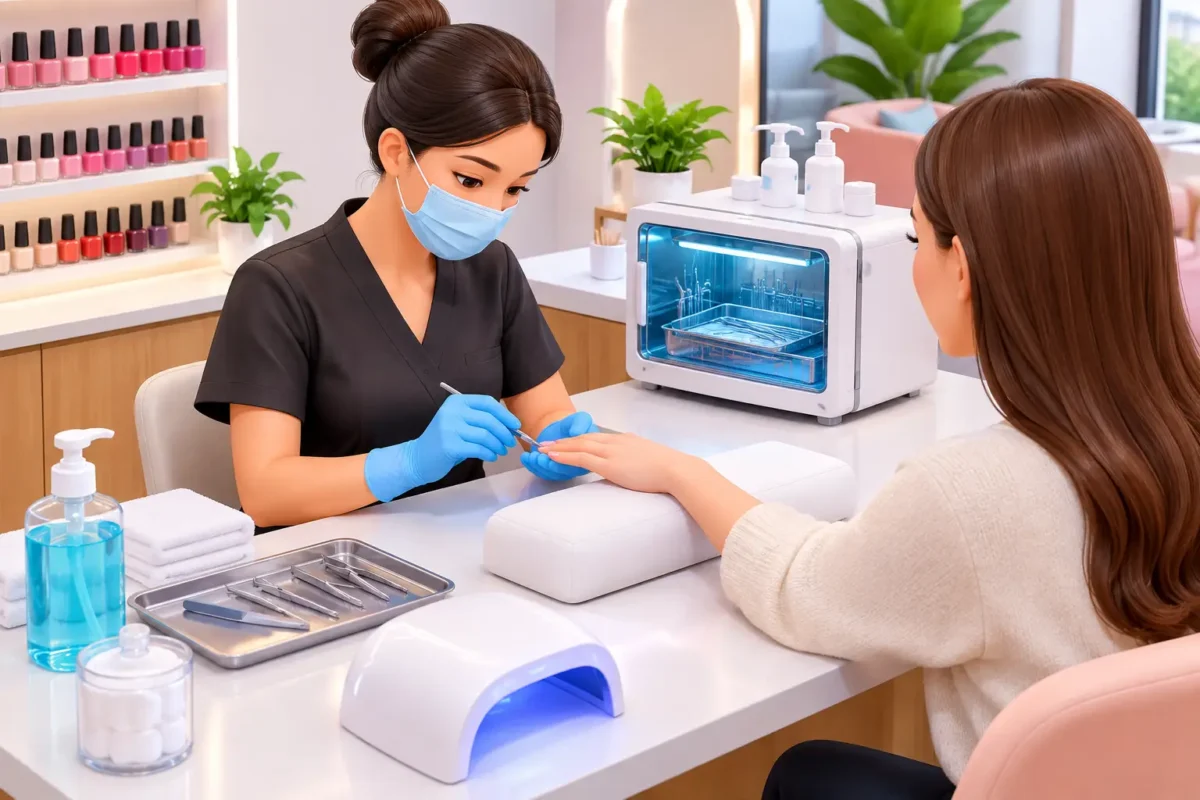
A beautiful manicure should begin long before color is chosen. Nail salon hygiene standards shape the comfort, confidence, and quality behind every service, whether you are booking a quick natural manicure, a restorative pedicure, or a detailed set of gel or acrylic enhancements. The most refined salon experiences make cleanliness feel effortless because careful preparation is built into every touch.
Why Nail Salon Hygiene Standards Matter
Hygiene is not an extra step added after the service. It is part of the technique. Proper sanitation protects the integrity of the appointment, helps maintain a clean and comfortable environment, and allows clients to relax while their technician focuses on the details that create a polished finish.
For clients, hygiene also builds trust. You may not see every backstage process, but you should notice a salon that treats its work area, tools, products, and guest experience with consistent care. Clean surfaces, organized stations, fresh linens, and a technician who prepares thoughtfully are not merely visual details. They signal discipline.
Standards can vary according to state and local licensing requirements, as well as the service being performed. A classic manicure does not require the same materials as a spa pedicure or a full acrylic application. Still, the principle remains the same: every item used on a client should be clean, properly handled, and appropriate for the service.
What a Hygienic Nail Appointment Should Include
A well-run appointment has a rhythm. Before your hands or feet are touched, the technician should have a clean, prepared workspace. The table or pedicure area should be cleared of debris, disinfected between guests, and set with the supplies needed for your service. That prevents unnecessary searching, cross-contact, and interruptions once the appointment begins.
Hand hygiene matters just as much. Both the technician and client should begin with clean hands, particularly before a manicure, enhancement service, or detailed nail art. For pedicures, a clean foot bath or basin is central to the experience. The chair, basin, controls, and surrounding surfaces should be cleaned and disinfected according to the equipment and product instructions between clients.
The distinction between cleaning and disinfection is meaningful. Cleaning removes visible dust, product residue, and debris. Disinfection uses an appropriate product and contact time to address microorganisms on nonporous surfaces and reusable implements. A tool that looks clean is not automatically disinfected, and a disinfectant cannot work effectively on a surface that has not first been cleaned.
Reusable tools require a complete process
Metal implements, such as cuticle nippers, pushers, and certain files, must be cleaned and disinfected after each use before they are returned to service. The process should follow the product label, including the proper dilution and contact time. Rushing this step weakens the result.
Some tools are designed for one client only. Buffers, wooden sticks, toe separators, disposable liners, and certain files should be discarded after use when they cannot be effectively disinfected. A premium service is not about reusing more efficiently. It is about choosing the right material for the task and handling it responsibly.
You may see clean implements stored in a closed, labeled container or package after they have completed the appropriate sanitation process. That kind of organization is reassuring because it separates ready-to-use tools from anything awaiting cleaning.
Products should be handled with care
Polish bottles, gel brushes, powders, lotions, and other products need thoughtful handling too. Technicians should avoid contaminating product containers with used applicators or touching the neck of a bottle with a tool that has contacted skin or nails. Product control keeps the station neat and supports a more precise application.
For dip powder services, application methods deserve special attention. The best approach depends on the product system and manufacturer guidance, but a salon should avoid practices that allow a shared container to contact multiple clients directly. Individual portions or other controlled application methods help preserve both hygiene and product quality.
Pedicure Hygiene Deserves Extra Attention
Pedicures are designed to be restorative, but they involve water, exfoliation, and close contact with the feet. That makes careful preparation especially visible. A clean pedicure basin should be free from residue, fully drained, cleaned, and disinfected between clients. If a chair uses jets, pipes, or removable components, the salon should follow the manufacturer’s cleaning procedure for those parts as well.
Disposable basin liners can add a useful layer of protection when they are used correctly, but they do not replace cleaning and disinfecting the chair and basin itself. The liner is one part of the process, not the entire process.
Clients should also feel comfortable mentioning cuts, irritation, ingrown nails, rashes, or any other concerns before the service begins. A skilled technician will assess what is appropriate to perform and may adjust or postpone part of the service when skin is compromised. That is not a lack of service. It is personalized care with your well-being in mind.
Signs of a Clean, Professional Salon
You do not need to inspect every cabinet to recognize a salon that values hygiene. Look for a calm, orderly environment rather than a rushed one. Stations should be reset between appointments, and technicians should have access to clean tools without sorting through previously used items.
A professional salon will also welcome reasonable questions. If you are unsure how foot spas are cleaned, whether files are single-use, or how tools are disinfected, asking is entirely appropriate. The answer should be clear, respectful, and specific, not vague or dismissive.
Be alert to details that can affect your experience: dusty work surfaces, visibly soiled tools, products used without care, or a technician continuing service over broken or irritated skin. One isolated imperfection does not always tell the whole story, but patterns of rushed preparation are worth taking seriously.
Your Role in a Comfortable, Hygienic Visit
Client care is a partnership. Arriving with clean hands and feet helps set the appointment up well, especially if you are coming from a long workday, commute, or workout. It is also helpful to share relevant sensitivities, allergies, or recent nail concerns before product is applied.
Avoid shaving immediately before a pedicure if you are prone to nicks or irritation. Tiny breaks in the skin can make the service less comfortable. If you have a fresh cut, signs of infection, or a medical condition that affects circulation or sensation, consider speaking with a healthcare professional and let your nail technician know before booking the service.
After your appointment, follow the guidance suited to your chosen service. Gel, acrylic, and dip powder enhancements can look flawless for weeks when they are applied and maintained correctly, but they should never be picked, peeled, or removed forcefully. Proper removal protects the natural nail and helps preserve the clean, healthy-looking finish you want for your next visit.
Hygiene Supports Better Results, Not Just Safer Ones
There is a practical beauty benefit to high standards. A clean nail plate supports better adhesion. Well-maintained tools create more controlled shaping and cuticle work. Fresh files and organized products help technicians work with precision, whether the look is a soft neutral manicure, crisp French tips, modern nail art, or a long-wearing enhancement.
The goal is not to make a salon visit feel clinical. It is to make the experience feel considered. At D&T Nails, detail, technique, and comfort belong together, so every service can feel as polished as the finished result.
Choose a salon where care is visible in the quiet moments: the reset of a station, the preparation of a fresh tool, the thoughtful question before a service begins. Those details make room for the part of the appointment you came to enjoy – time set aside for yourself, handled with skill and respect.